


Is Wood Or Composite Cladding Better?
Are you wanting to start your next project and wanting to know if wood or composite cladding better? A Straightforward Guide


Our pre-oiled merbau decking is 140 x 19mm hardwood in random lengths, oiled on all four sides before it reaches you. It suits builders and DIYers who want the boards protected through storage, transport and installation, and a head start on the finish. Send us your deck plans and we’ll work out the quantities.
A coat of oil on every face slows the rate at which the board takes up moisture. That helps protect the structural integrity of the timber and reduces warping, cupping and splitting while the boards sit on site and go down. Once the deck is laid you can leave it to weather and grey off naturally, or apply another clear coat to keep the deep red colour. Either way, touch up every cut end with a suitable top coat, because a saw cut exposes bare timber.
The WoodSolutions domestic timber deck design guide backs this approach. It recommends a protective finish on all surfaces of each decking board, including freshly cut ends, preferably before fixing.
| Property | Detail |
|---|---|
| Species | Merbau (Intsia bijuga), also called kwila |
| Size | 140 x 19mm |
| Lengths | Random |
| Finish | Pre-oiled on all four sides |
| Natural durability, above ground | Class 1 |
| Termite resistant | Yes (heartwood) |
| Bushfire | Bushfire-resisting timber, BAL-12.5, BAL-19 and BAL-29 |
| Seasoned density | About 860 kg/m³ |
Merbau grows through South East Asia, Papua New Guinea, the Pacific islands and northern Queensland. Its heartwood starts yellow-orange brown and deepens to red-brown with age, with an interlocked or wavy grain and a coarse, even texture. The WoodSolutions merbau profile rates it termite resistant. Read more on our main merbau decking page, which also covers the 90×19 profile.
One honest caution: 140mm is a wide board. WoodSolutions notes that wider boards are more prone to cupping and drain less freely than narrow ones, which is exactly why the pre-oiling on this product earns its keep. Our step-by-step deck building guide covers framing and layout.
Merbau contains water-soluble extractives that can leach out and stain unsealed brickwork, concrete and paving under or beside the deck. The pre-oiling helps, but keep cut ends sealed and watch the run-off in the first few wet spells. Re-oil at least once a year or as your coating maker suggests, and sweep rather than hose. Our deck maintenance tips go into more detail.
Pre-oiled merbau is delivered by our own trucks across Melbourne, or collect from the Watsonia yard; call us for a delivery price. We deliver 6 days a week, from a trailer load to a semi load, usually within 2 days. Call (03) 9435 2555 or send a decking quote request, and browse the rest of our timber decking range.
Not straight away. You can let it grey off naturally, or apply a clear coat to keep the red colour. Cut ends always need touching up.
This product is 140 x 19mm. Our standard merbau decking comes in 90×19 and 140×19, so call us to check what’s available pre-oiled.
Merbau is listed as a bushfire-resisting timber for BAL-12.5, 19 and 29 under AS 3959. Check your site’s BAL rating with your building surveyor.

These Ecowood treated pine plinth boards are 150 x 25mm and come in 5.4m and 6.0m lengths. Fencers, landscapers and home owners run plinths along the base of a timber fence to close the gap at ground level and hold back a little soil, and use them as simple edging around garden beds and paths. Call us with your fence length and we’ll work out how many you need.
| Property | Detail |
|---|---|
| Product | Ecowood treated pine plinth board |
| Size | 150 x 25mm |
| Lengths | 5.4m and 6.0m |
| Timber | Preservative-treated pine |
| Hazard class | Check the stamp on the bundle, or ask us about the current stock |
Treated pine is pine that has been impregnated with preservative, usually under pressure, to protect it against decay and insect attack. The WoodSolutions treated pine fact sheet notes that it keeps the same structural properties as untreated pine while its durability improves, and that fixed water-borne preservatives such as ACQ, copper azole and CCA won’t leach out even in contact with running water. Fencing and landscaping are among the common uses it lists.
Treated timber is graded by hazard class under the AS/NZS 1604 series. WoodSolutions’ guide to preservative treatments summarises the outdoor classes like this:
A plinth that sits in or against the soil is an H4 situation. If the board sits clear of the ground, H3 is the minimum. Check the H rating stamped on the bundle, or ask us which level the current stock is treated to.
One thing we’d push back on: a 25mm plinth isn’t a retaining wall. If the board has to hold back more than a little soil, use proper retaining wall sleepers built for the job.
Plinth boards usually run horizontally along the bottom of a paling or lapped fence, fixed to the posts, so the palings stay clear of the soil. They also work as low garden bed edging and as a border between a path and a lawn. For bigger landscaping jobs, browse our landscaping range or read about using sleepers in your garden.
Plinth boards are long lengths, so they’re delivered by our own trucks across Melbourne, or collect from the Watsonia yard; call us for a delivery price. We deliver 6 days a week, from a trailer load to a semi load, usually within 2 days. There’s more in our timber range from the same yard, including our treated pine supplies.
Call (03) 9435 2555 or send a quote request with your lengths and quantities.
Only if they’re treated to H4 or above. Check the stamp on the bundle or ask us.
Yes. WoodSolutions notes treated pine can be painted or stained just like untreated timber; use a water repellent if you don’t paint.
We list 150 x 25mm plinths in 5.4m and 6.0m lengths.
Yes. Re-coat all cut ends, drill holes and notches on site to keep the treatment intact.

Meranti stiles are lengths of meranti hardwood used for the upright members of doors, window sashes and frames. Meranti machines well to a smooth surface and takes paint, stain or polish, which is why joiners and carpenters use it for door and window work. We supply meranti stiles from our Watsonia yard to trades and DIYers across Melbourne.
Meranti is a hardwood from South East Asia, mainly Indonesia, Malaysia and the Philippines. It belongs to the Shorea genus, which takes in several species that vary in colour and grain, and in Australia it is also sold as Borneo cedar, seraya or lauan. The colour runs from pale pink to reddish brown, often with darker streaks, and the texture is moderately coarse but even.
WoodSolutions rates meranti’s workability as good. According to the WoodSolutions light red meranti profile, it machines to a smooth surface and takes standard fittings and fastenings easily. The grain is open, so fill it before you paint, stain or polish for an even finish.
Meranti is a joinery timber, not a naturally durable one. It is generally rated durability Class 3 to 4 above ground, the lower end of the AS 5604 scale, and WoodSolutions lists light red meranti as not termite resistant and susceptible to lyctid borer. The sapwood takes preservative readily, but heartwood penetration is insignificant with current commercial processes.
That doesn’t rule it out for external doors and windows; it means the coating and detailing do the protecting. The WoodSolutions guide to timber windows and doors says timber in the external envelope should be relatively durable or treated to be durable, and suggests designers can specify sills in a durable species, the rest of the frame in a more economical timber, and sashes or leaves in a light, highly stable species. On a door, the bottom rail and the bottom 300 mm take the most exposure. Our view: keep meranti for stiles, rails and sashes, and put a Class 1 hardwood such as merbau F27 in the sill.
Tell us what you’re making, whether it’s a panel door, a glazed door or a window sash, and the finished section you need, and we’ll check the lengths in the rack. WoodSolutions notes that gluing pairs of solid timber together creates a more stable section, which is worth weighing up for tall door stiles.
| Property | Detail |
|---|---|
| Species | Meranti (Shorea species) |
| Origin | South East Asia |
| Colour | Pale pink to reddish brown, darker streaks |
| Texture | Moderately coarse but even, open grain |
| Above-ground durability | Generally Class 3 to 4 (AS 5604) |
| Termites | Not resistant (light red meranti) |
| Lyctid borer | Susceptible |
| Workability | Good |
| Sizes | Call us for current stile sizes and lengths |
Meranti lengths are delivered by our own trucks across Melbourne, or you can collect from the Watsonia yard; call us for a delivery price. We deliver six days a week, usually within 2 days. Request a quote through our quote request page, and see our internal and external doors, our dressed hardwood and the wider doors range for related products.
Yes, with a well-maintained paint or clear coating and good detailing. It isn’t naturally durable, so don’t leave it bare outside.
The vertical, upright member at the side of a door, window sash or frame. The horizontal members are rails.
Yes. Fill the open grain first, then stain, paint or polish.
Call us with the section and length you need and we’ll check.

Dressed hardwood is sawn hardwood that has been planed or machined smooth on all four sides, so it arrives with clean faces, straight edges and consistent dimensions. That makes it the timber for work that stays on show: joinery, furniture, cabinetry, trims, stair parts and exposed framing. We supply dressed hardwood to Melbourne carpenters, joiners and DIYers from our family-run Watsonia yard.
Dressing removes rough sawn surfaces, imperfections and sharp edges, leaving a smooth finish that shows off the grain and colour. Just as useful, planing brings each piece to a consistent size with straight edges, so it fits together cleanly in joinery and framing and needs less work on site. If you don’t own a thicknesser, buying it dressed saves a lot of time at the bench.
Seasoning matters as much as dressing. Timber absorbs and loses moisture and moves as it does, so dry, seasoned stock is the safer choice for joinery. The Australian standard for sawn and milled hardwood, AS 2796, calls for a moisture content between 9% and 14%, according to the WoodSolutions technical design guide.
Species choice comes down to colour, hardness and whether the timber will see the weather. These WoodSolutions figures cover common Australian and imported hardwoods. Treat it as a species guide rather than a stock list, and call us to check what’s in the rack dressed.
| Species | Colour | Above-ground durability (AS 5604) | Hardness (kN Janka) |
|---|---|---|---|
| Victorian ash | Straw to pale reddish brown | Class 3 | 4.5 |
| Tasmanian oak | Straw to pale reddish brown | Class 3 | 4.5 to 8.0 |
| Blackbutt | Yellow to brown | Class 1 | 8.9 |
| Spotted gum | Pale to dark brown | Class 1 | 10.1 |
| Merbau (kwila) | Yellow brown to orange brown | Class 1 | 8.6 |
Inside the house, looks and workability usually matter more than durability class. Victorian ash and Tasmanian oak are both rated very good to work. Outside, step up to a Class 1 species such as blackbutt or merbau. Treads and benchtops take the most wear, so a harder species earns its keep there. Our view: for interior joinery, Victorian ash is the easy pick, with very good workability and consistent colour.
If the piece carries load, buy it stress graded: our F17 structural framing and merbau F27 dressed all round both carry stress grades, and blackbutt timber comes in decking profiles. Finishing a room? Our skirting boards and architraves page covers trims, and our timber supplies in Melbourne page shows the wider range.
Dressed hardwood lengths are delivered by our own trucks across Melbourne, or you can collect from the Watsonia yard; call us for a delivery price. We deliver six days a week, from a trailer load to a semi load, usually within 2 days. Send us your cutting list through our quote request page or call (03) 9435 2555.
Dressed all round: the timber has been planed on all four sides.
Yes, if you choose a durable species. Blackbutt, spotted gum and merbau are Class 1 above ground; Victorian ash and Tasmanian oak are Class 3 and better kept inside or well protected.
Only if it is stress graded. Ask for F17 or F27 stock where it carries load.
Tell us the finished size and length you need and we’ll check the rack.

Thermory makes real-wood cladding that has been thermally modified using only heat and steam, with no chemicals added. The process changes the wood right through the board and lowers how much moisture it takes up, so boards twist, cup and move less than untreated timber. We supply Thermory for exterior facades and for interior walls and ceilings, and it suits architects, builders and homeowners who want a natural timber finish with long rot resistance.
Because thermally modified boards absorb less moisture, they shrink and swell less outdoors. Thermory rates its cladding species for durability, measured as years of protection against wood decay when installed properly:
| Species | Durability class | Protection against decay |
|---|---|---|
| Thermo-ash | 1 | 25+ years |
| Thermo-spruce | 1 | 25+ years |
| Thermo-oak | 1 | 25+ years |
| Thermo-pine (Scots pine) | 2 | 15+ years |
| Thermo radiata pine | 2 | 15+ years |
Benchmark is Thermory’s natural thermally modified collection, with oil finishing as an option. The ash and pine boards below come unoiled in smooth or brushed textures, for exterior and interior use.
Benchmark thermo-ash is knot-free and intensely modified. Its standard range includes the C7J profile at 20 x 72mm and C23J at 20 x 150mm, with an end-matching option for faster installation and less waste.
Benchmark thermo-pine is thermally modified Scots pine with visible natural knots and a warm golden-brown tone when new. Profiles include C1 and C3 at 20 x 140mm, C7 at 26 x 68mm, C4J at 42 x 42mm and C7J at 20 x 65mm.
Beyond Benchmark, Thermory also offers Shingles in ash, paint-coated Vivid and Stripes boards, the embossed and paint-coated Ignite range, and Kodiak extra-wide spruce. Tell us the species and profile you’re after and we’ll quote it.
Left untreated outdoors, Thermory turns silver-grey. That can take anywhere from a few months to a few years depending on sun exposure, and it doesn’t reduce durability. We think that soft grey suits most Melbourne homes, and it saves the oiling. If you’d rather keep the warm tone, Thermory recommends a UV-resistant oil. Radiata pine is the exception: oil or paint all four sides before installation.
Boards can be fixed visibly with screws (pre-drill the holes) or hidden with clip systems such as PaCS Clad for a fastener-free face. For the substructure, Thermory recommends thermally modified pine battens, durability class 2.
Indoors, Thermory’s wall panels are made for bathrooms, kitchens, saunas and living spaces, and its Linea range is a wide thermo-aspen panel for walls and ceilings. The same stability that helps outside means less movement from season to season inside.
Cladding boards go out on our own trucks from the Watsonia yard to suburbs across Melbourne, 6 days a week and usually within 2 days, or you can collect. Call (03) 9435 2555 for a delivery price, or send your plans through our quote request page and we’ll work out quantities. Comparing options? See our timber cladding Melbourne overview, our Australian hardwood exterior cladding and the full claddings and linings range.
No. Thermory says no chemicals are added during thermal modification; it uses heat and steam only.
No surface treatment is required. Oiling is optional if you want to hold the original colour instead of letting it go silver-grey.
Thermory rates ash, spruce and oak at durability class 1 (25+ years against decay) and its pines at class 2 (15+ years). Details are on Thermory’s cladding page and Benchmark thermo-ash page.

Australian hardwood exterior cladding brings natural colour, strength and long service life to a facade. We supply four hardwood options: IronAsh H3, Spotted Gum, Ironbark and Silvertop Ash, each with its own colour, durability and bushfire rating. It suits builders and homeowners re-cladding a whole house or adding a timber feature wall, and our team can help you pick the right species for your site.
IronAsh is Tasmanian Oak from Australian Sustainable Hardwoods (ASH), based in Heyfield, Victoria, with a durable, water-based H3 treatment. The treatment doesn’t change the timber’s colour, so you can stain or paint it on site, and ASH’s Tru-Core treatment carries a warranty of up to 25 years against decay and insect attack. It’s medium density at 660 kg/m³, PEFC certified, and comes in cladding, batten and screening profiles.
Spotted gum is beautiful and durable, a good choice as a feature to lift a home or across an entire build. WoodSolutions gives it the top natural durability rating, Class 1, a seasoned density of 990 kg/m³ and termite resistance. The heartwood runs from light brown to deep red-brown.
Grey ironbark’s heartwood ranges from light grey and light chocolate to occasional deeper reds and browns. It’s the densest of the four here, at 1,106 kg/m³ seasoned, and is rated Class 1 for durability. Finishing with oil or a traditional varnish lifts the tones, and it suits features, south-facing walls and anywhere a darker colour is wanted.
Silvertop ash installs easily and looks good, with brown, sometimes pinkish heartwood and a seasoned density of 850 kg/m³. It’s rated Class 2 for durability. Unlike the others here, it is not termite resistant, so detail it well.
| Species | Durability | Density (seasoned) | Bushfire (per supplier / WoodSolutions) |
|---|---|---|---|
| IronAsh H3 | H3 treated (AS 1604) | 660 kg/m³ | BAL-19; BAL-29 and BAL-40 in proprietary systems |
| Spotted Gum | Class 1 | 990 kg/m³ | BAL-12.5, 19 and 29 |
| Grey Ironbark | Class 1 | 1,106 kg/m³ | BAL-12.5 and 19 |
| Silvertop Ash | Class 2 | 850 kg/m³ | BAL-12.5, 19 and 29 (over 18mm thick) |
Class 1 timber is rated for more than 40 years above ground; Class 2 for 15 to 40 years. WoodSolutions notes spotted gum 18mm thick or more doesn’t need fire-retardant treatment for bushfire-prone construction. Always check your site’s BAL and the limits in AS 3959 before you order.
Start with the look. Want a pale timber you can paint to match the trim? IronAsh. Want warm, varied hardwood colour from light brown to deep red-brown? Spotted gum. Want a dark, rich facade? Ironbark. In a BAL-29 zone, spotted gum and silvertop ash (over 18mm thick) are the two of these four that WoodSolutions lists at that level; IronAsh only reaches BAL-29 in proprietary systems. Our honest opinion: spotted gum is the safest all-rounder for a Melbourne re-clad, and it’s one of the easier hardwoods to finish, as WoodSolutions notes it’s less prone to tannin bleed.
Compare these with pine weatherboards and Thermory on our timber cladding in Melbourne page, or look at Thermory thermally modified cladding for a chemical-free alternative.
Hardwood cladding lengths are delivered by our own trucks from the Watsonia yard to suburbs across Melbourne, 6 days a week and usually within 2 days. You can also collect from 58 Watsonia Road. Send us your plans and we’ll work out quantities, or request a hardwood cladding quote. Call (03) 9435 2555 for a delivery price, and browse our claddings and linings for trims and other boards.
Spotted gum and ironbark are both rated Class 1 by WoodSolutions, the highest natural durability class.
Yes. ASH says its H3 treatment doesn’t affect the timber’s colour, so it can be stained or painted on site.
Several species are, at set BAL levels. Check the table above, then confirm with your builder. More on IronAsh is on the ASH IronAsh page, and spotted gum data is on WoodSolutions’ spotted gum page.

Skirting boards and architraves are the trim that finishes a room. Skirting covers the joint where the wall meets the floor, and architraves frame doors, windows and openings. We supply both for new builds and renovations across Melbourne: tell us the profile and width you’re after and we’ll check what’s in the yard. It suits carpenters, painters and renovators doing fit-off.
Skirting boards, also called baseboards or base mouldings, run along the bottom of interior walls. They do three jobs. They cover the joint between wall and floor for a clean, finished look. They protect the bottom of the wall from vacuum cleaners, furniture and foot traffic. And they hide gaps and imperfections where walls and floors don’t quite meet, giving a tidy transition between surfaces.
Architraves, sometimes called door casings or trim, are mouldings that surround door frames, window frames and sometimes openings in walls. They frame the opening, protect the edges of door and window frames from wear and tear, and come in a range of profiles and widths so you can pick a style that suits the room. Matching the architrave to the skirting profile ties a room together.
For a painted finish, MDF and primed mouldings save time, but WoodSolutions describes MDF as an interior product with poor moisture resistance, so think twice about it in laundries, bathrooms or anywhere a mop sits against it. For a clear or stained finish, choose a hardwood. The WoodSolutions Victorian ash profile lists mouldings among its common uses and notes its consistent colour, and meranti mouldings are another option, though its open grain needs filling before finishing.
Our view: taller skirting suits older Melbourne homes with high ceilings, while a slimmer profile looks right in most modern builds. When measuring, run the tape around every wall, then add extra for mitres, joins and offcuts. Architraves are worked out per door or window, with two legs and a head on each face you’re trimming.
Skirting and architraves are commonly fixed with construction adhesive and finish nails. A cordless finish nailer such as the Makita DBN610Z angled finish nailer speeds the job up, and our adhesive range and nails and brads range cover the rest. Fill the nail holes and caulk the top edge before painting for a crisp line.
Mouldings come in long lengths, so they’re delivered by our own trucks across Melbourne, or you can collect from the Watsonia yard; call us for a delivery price. We deliver six days a week (Monday to Friday 7am to 5pm, Saturday 7am to 2pm), usually within 2 days. Send us a room-by-room list and we’ll work out quantities, or ask through our quote request page. Hanging new doors as well? See our internal and external doors.
Skirting runs along the bottom of walls; architraves frame doors, windows and openings.
Be careful. MDF has poor moisture resistance, so ask us about alternatives for wet areas.
Bring in an offcut, or a photo with measurements, and we’ll check what we have that’s closest.
Measure each wall and opening, add extra for joins and offcuts, and send us the list.

Timber cladding covers a building’s exterior walls in boards, giving weather protection and a natural finish that suits everything from period homes to modern extensions. At our Watsonia yard we carry hardwood shiplap, H3 treated pine, IronAsh and Thermory, so you can compare species side by side. This page walks through what we stock, how the species differ, and how to get timber cladding delivered anywhere in Melbourne.
Cladding can be made from softwoods like pine or hardwoods like spotted gum, and installed as horizontal or vertical boards, shingles or panels. The profile and species you pick change the look, the upkeep and, in bushfire areas, what you’re allowed to use.
| Timber | Durability class | Seasoned density | Termite resistant |
|---|---|---|---|
| Spotted Gum | 1 | 990 kg/m³ | Yes |
| Blackbutt | 2 | 900 kg/m³ | Yes |
| Silvertop Ash | 2 | 850 kg/m³ | No |
| IronAsh (H3 treated Tasmanian Oak) | Treated to H3 | 660 kg/m³ | Treated for insect attack |
Durability classes come from WoodSolutions and apply to heartwood. Class 1 timber is rated for more than 40 years above ground, and Class 2 for 15 to 40 years. Sapwood in every species is non-durable and needs preservative treatment for exposed use.
Treated pine is a different approach. H3 is the treatment hazard class for timber used outside, above ground, where it gets wet and dries again, and decking, cladding and fascia are its typical uses under AS 1604. Primed H3 pine suits a painted weatherboard look.
Want a natural hardwood look that lasts? Spotted gum is the most durable of our shiplap species. Prefer a paler board you can stain or paint any colour? IronAsh is Tasmanian Oak with a water-based H3 treatment that doesn’t change the timber’s colour, and its Tru-Core treatment carries a warranty of up to 25 years against decay and insect attack. For the lowest upkeep in real wood, Thermory thermally modified cladding can be left to weather silver-grey.
In bushfire-prone areas, check your BAL before choosing. WoodSolutions lists spotted gum, blackbutt and silvertop ash for BAL-12.5, 19 and 29 applications, with thickness conditions, and IronAsh at BAL-19 (higher in proprietary systems). Our view: for a full re-clad in a BAL-29 zone, we’d start with spotted gum or blackbutt, which are both listed for that level and, unlike silvertop ash, both termite resistant.
More detail on each hardwood is on our Australian hardwood exterior cladding page. If you’re open to a non-timber option, compare composite cladding or read is wood or composite cladding better.
Hardwood cladding left unfinished will weather and change colour over time. If you want to hold its original tone, plan to recoat with a suitable exterior oil or stain. Spotted gum is one of the easier hardwoods to finish, as WoodSolutions notes it’s less prone to tannin bleed than other Australian hardwoods. Primed pine weatherboards should be top-coated with exterior paint.
Cladding boards are delivered by our own trucks from the Watsonia yard to all suburbs across Melbourne, 6 days a week, from a trailer load to a semi load, usually within 2 days. You can also collect from 58 Watsonia Road. Send us your plans and we’ll work out quantities, or request a timber cladding quote online. Call (03) 9435 2555 for a delivery price. Browse more timber supplies in Melbourne while you’re here.
Of our shiplap species, spotted gum has the highest natural durability rating, Class 1.
Yes. Primed H3 pine is made for painting, and IronAsh can be stained or painted on site.
Yes. Send us your plans and we’ll do the take-off. Species data is on WoodSolutions’ natural durability ratings page and ASH’s IronAsh product page.
This is solid merbau, graded F27, kiln dried (KD) and dressed all round (DAR) with pencil round edges, so it arrives ready to use as exposed beams, framing, stair parts and outdoor furniture. We list it in 90×42, 140×42, 185×42, 240×42 and 290×42, in a variety of lengths subject to availability. It suits builders and carpenters who want structural timber that looks finished straight off the truck.
Merbau (Intsia bijuga), also sold as kwila, is a tropical hardwood sourced largely from South East Asia, Papua New Guinea, the Pacific islands and far north Queensland. Freshly cut heartwood is yellow-orange brown and deepens and reddens with age. The grain is usually interlocked or wavy, with a coarse but even texture. The WoodSolutions merbau profile notes very little shrinkage or movement once seasoned, which backs up its reputation for being dimensionally stable and easy to work.
F27 is a seasoned stress grade, the top seasoned grade WoodSolutions lists for merbau at Structural No. 1. DAR means every face is planed, KD means it has been kiln dried, and pencil round means the sharp edges are lightly rounded. WoodSolutions notes that rounded arrises improve water run-off and help finishes adhere, so it is more than a neat look.
| Property | Detail |
|---|---|
| Species | Merbau (Intsia bijuga), also sold as kwila |
| Stress grade | F27 seasoned |
| Finish | Dressed all round, pencil round edges |
| Seasoning | Kiln dried |
| Sizes | 90×42, 140×42, 185×42, 240×42, 290×42 mm |
| Lengths | Various, subject to availability |
| Seasoned density | 860 kg/m³ |
| Above-ground durability | Class 1 (AS 5604) |
| Termites | Resistant |
| Lyctid borer | Untreated sapwood susceptible |
| Bushfire (AS 3959) | BAL-12.5, BAL-19 and BAL-29 |
Use it exposed in floor and roof framing, staircases and outdoor furniture, or anywhere inside where you want rich colour and a clean finish. With above-ground durability Class 1 and a WoodSolutions listing for BAL-12.5, BAL-19 and BAL-29 applications under AS 3959, it suits bushfire-prone sites too. Match it with our merbau decking or pre-oiled merbau decking for a deck and frame in one species.
Finish it with oil or stain: the clean, clear appearance takes both well, though WoodSolutions notes gum bleed is possible. Merbau is also prone to leaching, so plan where rainwater runs off it. WoodSolutions warns that water-soluble extractives washed out of hardwood can leave stains that are hard to remove from unsealed brickwork, concrete or paving. Our view: on a beam or stair stringer that people see up close, merbau’s colour does the work that paint does on pine.
Merbau lengths are delivered by our own trucks across Melbourne, or you can collect from the Watsonia yard; call us for a delivery price. Deliveries run six days a week, from a trailer load to a semi load, and usually arrive within 2 days. Tell us the sizes and lengths you need through our get a quote page or on (03) 9435 2555, and see our structural timber range for framing to go with it.
WoodSolutions lists merbau as suitable for BAL-12.5, BAL-19 and BAL-29 applications under AS 3959. Confirm the details with your building surveyor.
It can. Merbau is prone to leaching, so protect or seal light surfaces and direct runoff away from them. WoodSolutions also suggests a water-repellent finish on all surfaces, including freshly cut ends.
Dressed all round (planed on every face) and kiln dried.
WoodSolutions rates merbau termite resistant. Untreated sapwood is susceptible to lyctid borer.
F17 is a stress grade for seasoned hardwood, widely used for beams, lintels and exposed framing that has to look good as well as carry load. It is a core product for us: we stock F17 in 90×35, 90×45, 140×45, 190×45, 240×45 and 290×45, in Victorian ash, Tasmanian oak, flooded gum and other species. Builders use it for garage beams, window beams and exposed feature framing.
Prices are per lineal metre. Choose the size, enter the total metres you need as the quantity, and add the lengths you want in the order notes. We’ll call to confirm before your timber is ready to collect from the Watsonia yard, or to book it on our truck for delivery across Melbourne.
Hardwood for structural use is commonly graded under AS 2082, Timber – Hardwood – Visually stress graded for structural purposes. The F-grade a piece achieves depends on the species and the visual grade. Victorian ash, for example, rates F22 seasoned at Structural No. 1 and F17 seasoned at Structural No. 2, according to the WoodSolutions Victorian ash profile. Your span tables or engineer will specify the grade.
Seasoned F17 is easy to get hold of. The WoodSolutions hardwood fact sheet notes that seasoned F17 and F27 product is widely available, typically 35 or 45 mm in breadth with depths from 70 to 290 mm, and that seasoned hardwood is often glue laminated into longer, deeper sections (glulam).
| Property | Detail |
|---|---|
| Grade | F17 seasoned hardwood |
| Sections | 90×35, 90×45, 140×45, 190×45, 240×45, 290×45 mm |
| Species | Victorian ash, Tasmanian oak, flooded gum and others |
| Treatment | H3 treatment available |
| Above-ground durability | Class 3 for Victorian ash and Tasmanian oak (AS 5604) |
| Termites | Victorian ash: not resistant |
Seasoned hardwood turns up nearly everywhere in a building: general framing, large-span floor joists, high-strength beams and wall lintels, truss members, stair stringers and treads, and exposed beams. The colours and features in the timber also suit feature work inside homes and laminated benchtops.
Know the limits. Victorian ash and Tasmanian oak are durability Class 3 above ground, and WoodSolutions describes Victorian ash as suited to protected structural applications such as seasoned F17 framing. Outside, choose H3 treated F17 or a Class 1 species such as our merbau F27 dressed beams. Bear in mind that WoodSolutions says the heartwood of most species resists preservative, so treatment mainly protects the sapwood and the heartwood still relies on its natural durability. For spans beyond solid sections, compare LVL joists and beams. Our view: for an exposed beam indoors, Victorian ash F17 is hard to beat for its consistent colour.
F17 lengths are delivered by our own trucks across Melbourne, or you can collect from the Watsonia yard; call us for a delivery price. We deliver six days a week, from a trailer load to a semi load, usually within 2 days. Send us your plans and we’ll work out quantities, or request a quote through our get a quote page. Our pergola building tips are a good read before you order beams, and the full structural timber range has the rest of the frame.
Victorian ash and Tasmanian oak are Class 3 above ground, so keep them protected or use H3 treated F17. For full weather exposure, a Class 1 species is the better pick.
Not quite. WoodSolutions says Tasmanian oak is a trade name covering alpine ash, mountain ash and messmate, while Victorian ash is alpine ash and mountain ash, so Tasmanian oak varies more in colour.
They are separate grading systems: F17 is a stress grade for visually graded hardwood, and MGP10 is machine graded pine. Your plans will name the grade to use.
WoodSolutions notes seasoned hardwood lengths up to 5.4 m are generally available in 0.3 m steps. Call us for what’s in the rack.
LVL (laminated veneer lumber) is an engineered timber made from veneers bonded together under heat and pressure, and it is stronger, straighter and more uniform than solid timber. We supply it in 90×45, 140×45, 190×45, 240×45 and 290×45, plus 200×42, 300×42 and 360×42, for beams, lintels, floor joists and rafters. It suits builders, framers and owner-builders working from an engineer’s design or a manufacturer’s span tables.
Prices are per lineal metre. Choose the size, enter the total metres you need as the quantity, and add the lengths you want in the order notes. We’ll call to confirm before your timber is ready to collect from the Watsonia yard, or to book it on our truck for delivery across Melbourne.
Thin veneers are dried and laid up with the grain of every veneer running the same way, then bonded under heat and pressure into large sheets or billets. Sections are cut from those billets, which is why LVL can be made to almost any length, limited mainly by what can be transported to site. The result is less prone to shrinking or warping than solid timber, with consistent strength from one length to the next, as the WoodSolutions overview of LVL explains.
Structural LVL is made to AS/NZS 4357, the Australian and New Zealand standard for structural laminated veneer lumber. Because every length is engineered to known properties, builders and engineers can predict its performance in a frame with confidence.
| Property | Detail |
|---|---|
| Product | Laminated veneer lumber (LVL) |
| Sizes we list | 90×45, 140×45, 190×45, 240×45, 290×45, 200×42, 300×42, 360×42 mm |
| Construction | Veneers bonded under heat and pressure, grain all one direction |
| Standard | AS/NZS 4357 (structural LVL) |
| Lengths | Can be made to almost any length; ask what’s in the yard |
| Treatment options | LVL can be LOSP treated to H2 or H3; ask us |
WoodSolutions lists beams, lintels, purlins, truss chords and formwork among LVL’s uses, and it is common as floor joists, roof beams and headers too. Its strength-to-weight ratio makes it particularly suitable for long spans and heavy loads. WoodSolutions also notes that engineered options such as LVL are increasingly used for longer spans or reduced floor depths under AS 1684.2.
LVL is sold under different brands and grades, each with its own span tables, so size it from those tables or your engineer’s design rather than a solid-timber table. Our take: when a lintel span has you reaching for doubled-up solid timber, ask us to quote an LVL alongside it. Compare our MGP10 pine framing for standard walls and F17 hardwood framing for exposed beams, or browse the full structural timber range.
Keep LVL stacked flat, off the ground and covered until it is built in, and don’t cut, notch or drill beams beyond what the manufacturer’s literature allows, because holes and notches change capacity. Where termites or weather exposure are a concern, the NSW EPA notes LVL can be treated with LOSP to H2 or H3, so ask us what’s available in your size.
Long LVL lengths are delivered by our own trucks across Melbourne, or you can collect from the Watsonia yard; call us for a delivery price. We deliver six days a week, Monday to Friday 7am to 5pm and Saturday 7am to 2pm, usually within 2 days. Send us your plans or the engineer’s schedule and we’ll work out quantities, or use our quote request page.
Untreated LVL should be kept protected from the weather. LVL can be LOSP treated to H3 for above-ground exposure; ask us about availability.
LVL can be made to almost any length, limited mainly by transport. Tell us the length you need and we’ll check stock.
It is stronger, straighter and more uniform, and less prone to shrinking or warping. For short, standard spans, solid MGP10 often does the job.
Only as the manufacturer’s literature allows. Holes and notches reduce capacity, so check before you cut.
H3 and H4 are the two treated pine hazard classes most outdoor jobs come down to: H3 for timber above the ground, H4 for timber that goes into it. We stock unprimed sizes from 70×35 to 290×45, 90×90 and 115×115 posts, and a pre-primed range ready for top coats. It’s the timber for deck builders, fencers, landscapers and anyone putting up a pergola or carport.
Prices are per lineal metre. Choose the size, enter the total metres you need as the quantity, and add the lengths you want in the order notes. We’ll call to confirm before your timber is ready to collect from the Watsonia yard, or to book it on our truck for delivery across Melbourne.
The AS/NZS 1604 series sets hazard classes H1 to H6, each describing a higher level of biological threat. Outdoors, these are the ones that matter.
| Class | Exposure | Typical uses |
|---|---|---|
| H3 | Outside, above ground, periodically wet and allowed to dry | Decking, cladding, fascia |
| H4 | Outside, in ground or continuously damp, non-critical | Fence posts, pergola posts, landscaping |
| H5 (not this product) | In ground or fresh water, critical structural | Retaining walls, piles, stumps |
The WoodSolutions guide to preservative treatments and use classes is clear that H4 is not suitable for critical structural elements. For any structural element in ground contact, it calls for H5 or a Class 1 durable hardwood, so look at our retaining wall sleepers and steel sections for walls that hold back soil. Our article on using sleepers in your garden covers lighter landscaping.
| Range | Sections (mm) |
|---|---|
| Unprimed | 70×35, 70×45, 90×35, 90×45, 140×35, 140×45, 190×45, 240×45, 290×45 |
| Unprimed posts | 90×90, 115×115 |
| Pre-primed | 66×30, 66×42, 90×30, 90×42, 138×30, 138×42, 185×30, 185×42, 230×30, 230×42 |
| Pre-primed posts | 88×88, 112×112 |
Not every section comes in both hazard classes, so tell us where each piece is going and we’ll match H3 or H4 to the job.
Treatment only protects the timber it reaches. WoodSolutions advises resealing cut ends straight after cutting with preservative or primer, and re-coating drill holes and rebates on site. Check the end tag or face stamp too: it should show the species, preservative, hazard class, the standard (such as AS/NZS 1604.1) and the treatment plant.
Fixings matter as well. The WoodSolutions durability guide notes that some preservatives, such as CCA and ACQ, are corrosive to zinc-plated steel, so choose fasteners rated for treated timber from our screws range. CCA treated timber is also not allowed for handrails, decking or play equipment where people touch it often, so ask which preservative is in the stock if that applies to your job. Our view: any post that goes in the ground, even a letterbox post, deserves H4 at minimum.
Treated pine lengths and posts are delivered by our own trucks across Melbourne, or you can collect from our Watsonia yard; call us for a delivery price. We deliver six days a week, from a trailer load to a semi load, usually within 2 days. Request a quote through our quote request page or call (03) 9435 2555. For LOSP framing sizes, see our treated pine supplies.
No. H3 is for outside, above ground. Anything set in soil or concrete needs H4 at least.
WoodSolutions treats retaining walls as critical in-ground work needing H5 or a Class 1 durable hardwood. Talk to us about sleepers instead.
Pre-primed lengths come with a primer coat ready for top coats, and they are listed in their own sections, for example 90×42 rather than 90×45.
Read the end tag or stamp. It shows the hazard class, preservative and treatment plant.

MGP10 is machine graded structural pine, the everyday timber for wall studs, plates, roof framing and floor joists in Australian houses. We stock it in 70×35, 70×45, 90×35 and 90×45, and deliver it across Melbourne from our Watsonia yard. It suits builders and carpenters working from the AS 1684 span tables, and owner-builders who need framing their engineer or building surveyor will recognise.
Prices are per lineal metre. Choose the size, enter the total metres you need as the quantity, and add the lengths you want in the order notes. We’ll call to confirm before your timber is ready to collect from the Watsonia yard, or to book it on our truck for delivery across Melbourne.
MGP stands for machine graded pine. Each length runs through a grading machine that assigns a grade from the minimum stiffness, or modulus of elasticity, measured along the piece. Qualified graders then check each piece by eye and can override the machine to downgrade it, and the printed mark on the length shows the grade of the whole piece. According to the WoodSolutions explanation of machine stress grading, MGP grades can only be given to Australian pine that has been machine graded.
The number tells you the stiffness class. MGP10 has a modulus of elasticity of about 10,000 MPa, while MGP12 and MGP15 are stiffer grades, and the AS 1684 span tables carry design values for all three. Because the grade is measured rather than guessed, builders and engineers can predict how each length will perform in the frame.
| Property | Detail |
|---|---|
| Grade | MGP10 (machine graded pine) |
| Sections we stock | 70×35, 90×35, 70×45, 90×45, 140×45, 190×45, 240×45 mm |
| Stiffness | Modulus of elasticity about 10,000 MPa |
| Grade mark | Printed on each length |
| Grading | Machine graded, visually checked by qualified graders |
| Design reference | AS 1684 span tables |
We also carry merchant grade pine. Ask us whether it suits your job before you swap it in for stress-graded framing.
MGP10 is used in residential and light commercial building for wall framing, roof trusses, floor joists, and beams and lintels. WoodSolutions notes that residential studs are typically 90×35 or 90×45 kiln-dried, machine-graded pine, usually MGP10 or MGP12, which lines up with what we keep in the yard. The 70 mm sections suit walls where the plans call for a thinner frame.
For longer spans or shallower floors, engineered options are increasingly used, so look at our LVL joists and beams before you double up pine. In termite-prone areas, WoodSolutions notes it is common to use envelope-treated H2 pine with physical barriers at ground level; ask us whether treated framing is available in the size you need. Our view: if a lintel sits right at the limit of the MGP10 span table, ask your designer about a stiffer grade or LVL rather than squeezing it.
Framing packs and loose lengths are delivered by our own trucks across Melbourne, or you can collect from the Watsonia yard; call us for a delivery price. We deliver six days a week, from a trailer load to a semi load, usually within 2 days. Send us your plans and we’ll work out quantities, or use the get a quote form. While you’re ordering, our framing nails and collated fasteners and the wider structural timber range cover the rest of the frame.
Both are machine graded pine. MGP12 is the stiffer grade, so it reaches further in the AS 1684 span tables. Your plans or engineer will name the grade.
Not unless it is branded as treated. Treated timber must carry a brand or label showing the H class, so check the stamp.
Untreated radiata pine is rated durability Class 4 above ground, the lowest class, so keep untreated framing under cover and use LOSP treated pine for exposed work.
Call us with your list and we’ll confirm the lengths in the yard.

Spotted gum is a native Australian hardwood known for its distinctive markings, high density and long life outdoors. We stock spotted gum decking in 64×19, 86×19 and 135×19 for builders, deck specialists and home owners, including people building in bushfire-prone areas. Send us your plans and we’ll work out the quantities.
The name comes from the tree’s smooth bark, which sheds in patches and leaves a spotted look on the trunk. Spotted gum (Corymbia maculata, C. citriodora and C. henryi) grows along the east coast from north-east Victoria to the northern tablelands of Queensland. The heartwood runs from light brown through to dark red-brown, and some boards show a wavy fiddleback figure. The texture is moderately coarse and uneven, and the wood has a slightly greasy feel that helps when machining and drilling. The figures below come from the WoodSolutions spotted gum species data and its deck design guide.
| Property | Spotted gum |
|---|---|
| Decking sizes we list | 64×19, 86×19 and 135x19mm |
| Seasoned density | About 990 kg/m³ |
| Natural durability, above ground | Class 1 |
| Natural durability, in ground | Class 2 |
| Termite resistant | Yes |
| Lyctid borer | Sapwood susceptible |
| Bushfire | Bushfire-resisting timber, BAL-12.5, BAL-19 and BAL-29 |
It’s dense, hard and strong. At around 990 kg/m³ seasoned it’s denser than the merbau, turpentine and silvertop ash decking we list. WoodSolutions calls it the main Australian timber for tool handles that take heavy impact, and it’s used in wharf and bridge construction. The heartwood is rated Class 1 above ground, which WoodSolutions puts at more than 40 years, and it’s termite resistant.
Fire performance matters on Melbourne’s bushfire-prone fringe. Spotted gum is listed as a bushfire-resisting timber for BAL-12.5, BAL-19 and BAL-29 under AS 3959, and WoodSolutions notes that components 18mm or thicker don’t need fire-retardant treatment for construction in bushfire-prone areas. All three of our sizes are 19mm thick.
It’s also less prone to tannin bleed than many other Australian hardwoods, so there’s less risk of staining paving and concrete around the deck.
If you want one hardwood that ticks the most boxes for a Melbourne deck, spotted gum is where we’d start. The trade-off is colour variation. Boards range from pale brown to dark red-brown, so a deck will look varied rather than uniform. Lay the boards out before fixing if you want to spread the colours evenly.
The 64×19 and 86×19 are narrow boards that drain well, which the WoodSolutions domestic timber deck design guide favours. The 135×19 gives a broader, more modern look but is more prone to cupping, so finish all four faces before laying. For 19mm hardwood in Medium Feature or Standard grade, AS 1684 allows joists at up to 500mm centres. Pre-drill near ends and edges, keep fixings at least 12mm in, and use hot-dipped galvanised or stainless fixings. Our guide on how to build a deck covers the framing.
A penetrating decking oil suits spotted gum better than a film-forming coating. Re-oil at least once a year or as your coating maker suggests, and sweep rather than hose. Our deck maintenance tips cover the routine, and our article on choosing the best wood for decking compares species.
Spotted gum decking is delivered by our own trucks across Melbourne, or collect from the Watsonia yard; call us for a delivery price. We deliver 6 days a week, from a trailer load to a semi load, usually within 2 days (Monday to Friday 7am to 5pm, Saturday 7am to 2pm).
Call (03) 9435 2555 or send a decking quote request with your plans. You’ll find other species in our full timber decking range.
Yes. It’s listed for BAL-12.5, BAL-19 and BAL-29 under AS 3959, and at 18mm or thicker it doesn’t need fire-retardant treatment. Confirm your BAL with your building surveyor.
It’s less prone to tannin bleed than many Australian hardwoods, but seal all faces and cut ends to keep the risk low.
Both suit BAL-29. Spotted gum is denser, Class 1 above ground and termite resistant, while our silvertop ash decking is Class 2, not termite resistant, and more rustic in look.

Silvertop ash is a native Australian hardwood with a rustic character, full of pencil streaks, visible growth rings and gum veins. We stock silvertop ash decking in 86×19, 90×22, 135×19 and 134×22, and it’s a popular pick for homes in bushfire-prone areas because it qualifies for BAL-29 at more than 18mm thick. It suits builders and home owners who want a hardwood deck with a point of difference.
Silvertop ash (Eucalyptus sieberi), also called coast ash or black ash, grows on the southern and central coast and tablelands of New South Wales, in eastern Victoria and in north-eastern Tasmania. The heartwood is brown, sometimes with a pinkish tint, and the sapwood is narrow. Expect a medium texture, interlocked grain, gum veins, pencil streaks and the odd pinhole borer mark. Those features are the look. The figures below come from the WoodSolutions silvertop ash species data, with the above-ground durability class from the Queensland Government’s timber properties data.
| Property | Silvertop ash |
|---|---|
| Decking sizes we list | 86×19, 90×22, 135×19 and 134x22mm |
| Seasoned density | About 850 kg/m³ |
| Natural durability, above ground | Class 2 |
| Lyctid borer | Not susceptible |
| Termite resistant | No |
| Bushfire | BAL-12.5, BAL-19 and BAL-29 (thickness over 18mm) |
Fire performance is the headline. Silvertop ash is one of seven hardwoods that Victoria’s Building Commission found suitable for homes in bushfire areas, provided the timber is more than 18mm thick, and WoodSolutions lists it for BAL-12.5, BAL-19 and BAL-29 applications under AS 3959. Every size we list is 19mm or 22mm thick. That makes it a popular alternative to spotted gum decking and ironbark in BAL-rated areas.
It’s relatively easy to handle on site, and its natural durability is Class 2 above ground, a life expectancy of 15 to 40 years.
Silvertop ash isn’t rated termite resistant, so talk to your builder about termite management for the subframe if your site has activity. It’s also slow to dry and prone to surface checking, so seal the boards on all faces, including cut ends, before or as you lay them. Class 2 durability means a regular oiling routine matters more than it would with a Class 1 species.
Our take: the gum veins and pencil streaks put some people off, but they’re the whole reason to choose silvertop ash. If you want a uniform, clean-looking deck, another species will suit you better.
The 86×19 and 135×19 boards suit standard decks, while the 22mm boards (90×22 and 134×22) add thickness. The WoodSolutions domestic timber deck design guide notes that narrow boards drain more easily and that wider boards need extra thickness to resist cupping, so if you want a wide board, the 134×22 is a better choice than the 135×19. For 19mm hardwood decking in Medium Feature or Standard grade, AS 1684 allows joists at up to 500mm centres. Pre-drill near ends and edges and keep fixings at least 12mm in. Our guide on how to build a deck covers the rest.
Use a penetrating decking oil rather than a film-forming coating, re-oil at least once a year or as your coating maker suggests, and sweep rather than hose. Hot-dipped galvanised or stainless fixings are a must, with stainless within 1km of the coast or in a pool splash zone. More in our deck maintenance tips.
Silvertop ash decking is delivered by our own trucks across Melbourne, or collect from the Watsonia yard; call us for a delivery price. We deliver 6 days a week, from a trailer load to a semi load, usually within 2 days (Monday to Friday 7am to 5pm, Saturday 7am to 2pm).
Call (03) 9435 2555 or send a quote request with your deck plans, and we’ll work out the quantities. You can also compare it with our Australian turpentine decking or browse the full timber decking range.
Yes, provided the boards are more than 18mm thick. All our silvertop ash decking sizes are 19mm or 22mm. Check your site’s BAL with your building surveyor.
No. WoodSolutions does not rate it termite resistant, so plan termite management for the subfloor.
Brown heartwood, sometimes pinkish, with gum veins, pencil streaks and visible growth rings through it.

Australian turpentine is a dense native hardwood with deep red to red-brown heartwood, and we stock it as 135 x 19mm decking in random lengths. It suits deck builders and home owners who want a durable, termite-resistant board with strong fire credentials, including for BAL-29 sites. Send us your plans and we’ll work out the quantities.
Turpentine (Syncarpia glomulifera) is a large hardwood from the high rainfall country of Australia’s east coast, growing from Batemans Bay in New South Wales to Cooktown in far north Queensland. The heartwood ranges from deep red to red-brown, the sapwood is paler and often cream, and the texture is fine to medium with a wavy, interlocked grain. It’s relatively free of gum veins, which helps keep the look of a deck clean and even. The figures below come from the WoodSolutions turpentine species data and its deck design guide.
| Property | Turpentine |
|---|---|
| Decking size we list | 135 x 19mm, random lengths |
| Seasoned density | About 945 kg/m³ |
| Natural durability, above ground | Class 1 |
| Natural durability, in ground | Class 2 |
| Termite resistant | Yes |
| Lyctid borer | Not susceptible |
| Bushfire | Bushfire-resisting timber, BAL-12.5, BAL-19 and BAL-29 |
| Hardness, seasoned (WoodSolutions figure) | 11.6 |
Turpentine has a long track record in tough places. WoodSolutions calls it the main Australian species for marine piling, it’s used in wharf and bridge construction, and its high silica content makes it resistant to marine borers. On a house deck, the numbers that matter are Class 1 above-ground durability, which WoodSolutions puts at more than 40 years, and termite resistance.
Fire performance is the other big reason. WoodSolutions notes that untreated turpentine performs like fire-retardant-treated timber under AS/NZS 3837, and it sits on the bushfire-resisting timber list for BAL-12.5, BAL-19 and BAL-29 under AS 3959. For Melbourne homes in designated bushfire-prone areas, that’s a big tick.
We think turpentine deserves more attention in Melbourne. It shares bushfire-resisting status with spotted gum and has a richer, redder colour.
On the limits side, it’s dense and hard, so pre-drill near edges and ends: keep fixings at least 12mm in, with holes about 80% of the nail diameter. Random lengths mean more butt joints to plan, and each one should land on a joist. Like most hardwoods it contains water-soluble extractives that can stain unsealed paving and brickwork, so finish all faces and cut ends before laying.
For 19mm hardwood decking in Medium Feature or Standard grade, AS 1684 allows joists at up to 500mm centres, according to the WoodSolutions domestic timber deck design guide. Use hot-dipped galvanised or stainless fixings (stainless within 1km of the coast or in a pool splash zone), and keep the boards 10mm off the house wall. Our step-by-step guide on building a timber deck covers framing and layout, and our article on the best wood for decking compares species.
A penetrating decking oil suits turpentine better than a film-forming coating, which foot traffic wears through. Re-oil at least once a year or as the coating maker suggests, sweep rather than hose the deck, and lift pot plants onto drip trays. See our deck maintenance tips for the full routine.
Turpentine decking is delivered by our own trucks across Melbourne, or collect from the Watsonia yard; call us for a delivery price. We deliver 6 days a week, from a trailer load to a semi load, usually within 2 days (Monday to Friday 7am to 5pm, Saturday 7am to 2pm).
Call (03) 9435 2555 or use our quote request form. Comparing species? See our spotted gum decking, silvertop ash decking or the full timber decking range.
Yes. WoodSolutions lists turpentine as a bushfire-resisting timber for BAL-12.5, BAL-19 and BAL-29 under AS 3959. Confirm your BAL with your building surveyor.
Yes. The heartwood is rated termite resistant, and the sapwood isn’t susceptible to lyctid borer.
Our turpentine decking is 135 x 19mm in random lengths. Tell us the deck size and we’ll work out how many lineal metres to order.


Are you wanting to start your next project and wanting to know if wood or composite cladding better? A Straightforward Guide
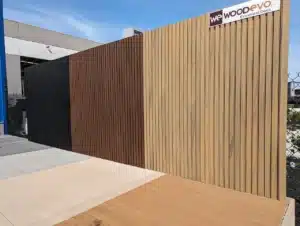
Introducing WoodEvo: Premium Composite Cladding Now Available at Rex Paine Timber At Rex Paine Timber, we takes pride in offering top-quality
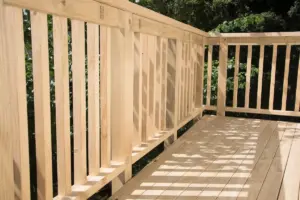
How to Build a Deck in Australia Deck building is a favourite DIY project. When you plan one, the amount of work
Are you wanting to start your next project and wanting to know if wood or composite cladding better? A Straightforward Guide
Introducing WoodEvo: Premium Composite Cladding Now Available at Rex Paine Timber At Rex Paine Timber, we takes pride in offering top-quality
How to Build a Deck in Australia Deck building is a favourite DIY project. When you plan one, the amount of work